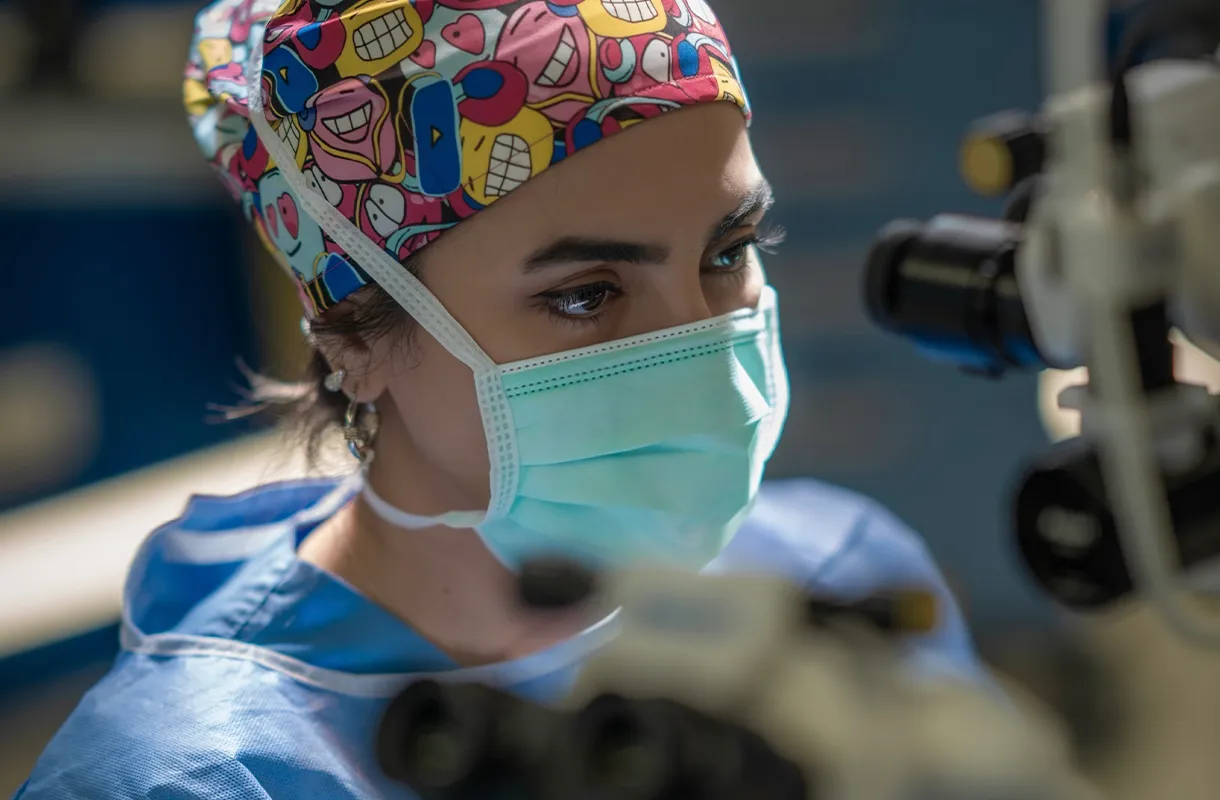
Plus LASIK

Author: Assoc. Prof. Dr. Elif Ceren Yeşilkaya, Ophthalmologist, Cornea and Refractive Surgery
Published: · Last updated:
In Plus LASIK, the laser plan is based on a detailed map of your eye as well as your glasses prescription.
How it differs from other methodsWhat is Plus LASIK?
Plus LASIK is laser surgery on the clear front surface of your eye (the cornea). The laser plan uses a detailed map of your eye as well as your glasses prescription.
If you have short-sightedness, long-sightedness or astigmatism, Plus LASIK is one of the surgical options that may be discussed.
You may still need glasses after surgery.
Why is vision blurred, and what does the laser do?
The retina is the layer at the back of your eye that detects images. In short-sightedness, light focuses in front of the retina and distant objects look blurred. The laser aims to reshape the cornea so that light focuses on the retina.
Light focuses in front of the retina Aim: to focus light on the retina
How does it differ from standard LASIK?
The surgical steps are the same. The difference is how the laser plan is prepared.
Standard LASIK
Glasses prescription
Laser plan
Plus LASIK
Glasses prescription
Map of your eye
Laser plan
Even with a plan based on detailed measurements, visual outcomes vary from person to person.
How does it differ from other methods?
Select a method to see how it works in the diagram. You can compare the differences in the table.
Plus LASIK
- A thin flap is created in the cornea.
- The laser reshapes the cornea beneath the flap.
- The thin flap is laid back in place.
The thin flap here is different from the eyelid you use to open and close your eye.
SMILE Pro
- The laser creates a piece of tissue within the cornea.
- The piece of tissue is removed through a small incision.
- The cornea takes on its new shape.
The small piece of tissue created by the laser is lens-shaped.
Read about this methodSurface laser (PRK)
- The thin surface layer of the cornea is removed.
- The laser reshapes the cornea from the surface.
- The surface layer regrows over time.
A contact lens protects your eye while the surface layer regrows.
Read about this methodIntraocular lens
- A small incision is made at the edge of the cornea.
- The lens is passed into the eye through the small incision.
- The lens is placed in front of your natural lens.
Your natural lens stays in place. The added lens sits behind the coloured part of your eye.
Read about this method| Question | Plus LASIK and standard LASIK | SMILE Pro | Surface laser (PRK) | Intraocular lens |
|---|---|---|---|---|
| Is a thin flap created? | Plus LASIK and standard LASIK Yes | SMILE Pro No | Surface laser (PRK) No | Intraocular lens No |
| Where in the eye is the procedure carried out? | Plus LASIK and standard LASIK In the cornea, beneath the flap | SMILE Pro Within the cornea | Surface laser (PRK) On the surface of the cornea | Intraocular lens Inside the eye |
| Who is it usually considered for? | Plus LASIK and standard LASIK If you have short-sightedness, long-sightedness or astigmatism | SMILE Pro If you have short-sightedness, with or without astigmatism | Surface laser (PRK) If you have a thin cornea and suitable measurements | Intraocular lens If laser surgery is not suitable for you |
Not every method is suitable for every eye. The choice depends on your examination findings. Continuing to wear glasses or contact lenses is also an option.
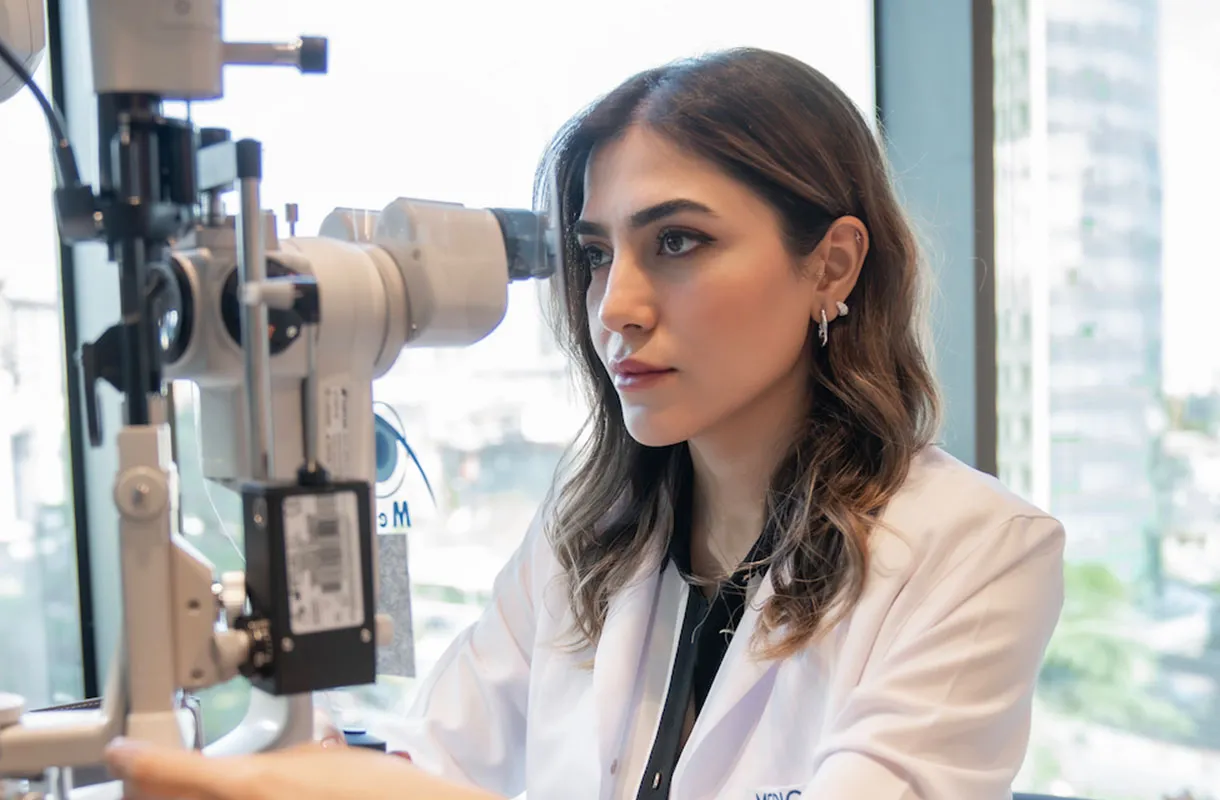
Could it be suitable for me?
These questions help you prepare for your consultation. Your answers are considered alongside your eye measurements.
-
Am I an adult?
Surgery is considered for adults. Your prescription can change while your eye is still developing.
-
Is my glasses prescription changing?
Your prescription is measured and compared with previous prescriptions. If it is still changing, surgery may need to be postponed.
-
Are my corneal thickness and shape suitable?
The thickness and shape are measured. Your eye is checked for keratoconus, a condition in which the cornea thins and becomes cone-shaped.
-
Do I have dry eye or an infection?
Your tears and the surface of your eye are assessed. Dryness or infection may need treatment before surgery.
-
Am I pregnant or breastfeeding?
Tell your doctor if you are pregnant or breastfeeding, and about any medicines you take. These can affect the measurements or how your eye heals.
This list does not replace a diagnosis. Your examination determines whether surgery is suitable for you.
What problems could I experience?
The following problems can occur after Plus LASIK. Discuss the risks that apply to you with your doctor.
- Dry eye may develop or existing dryness may get worse; it can be permanent.
- Halos and glare around lights may occur at night.
- Your prescription may be under- or over-corrected.
- The thin flap may wrinkle or shift; further treatment may be needed.
- Infection may develop; the cornea may weaken and change shape.
- Vision loss that cannot be corrected with glasses may occur.
Preparation and care after surgery
Before your examination
- Bring your previous glasses prescriptions and any eye measurements you have.
- Prepare a list of your medicines.
- Ask when you should stop wearing your contact lenses before the measurements.
On the day of surgery
- Do not wear make-up around your eyes.
- Arrange transport so that you do not need to drive.
- You may feel pressure; tell the team if you feel uncomfortable.
After surgery
- Do not rub your eye.
- Use your drops as instructed.
- Keep your scheduled check-up appointments.
- You may have a gritty feeling and watering; describe your symptoms at your check-ups.
Short videos on this topic
Assoc. Prof. Dr. Elif Ceren Yeşilkaya answers questions on this topic. The videos are in Turkish, with Turkish subtitles. 6 videos in total.
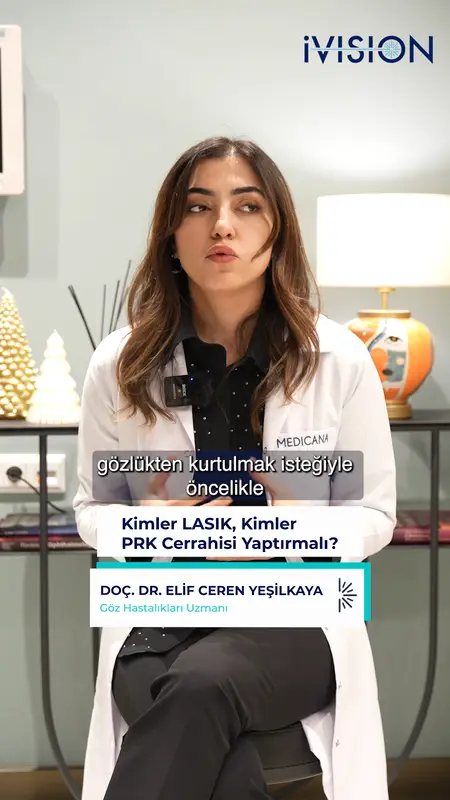
Who Should Have LASIK and Who Should Have PRK?

What Is a Refractive Error?
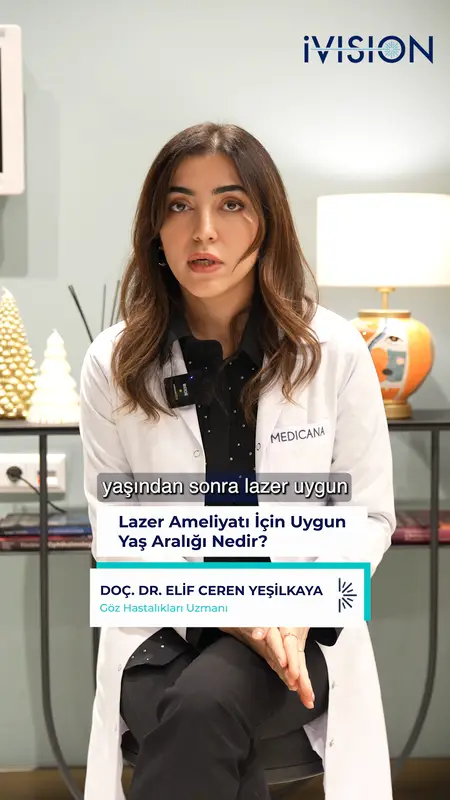
What Is the Right Age for Laser Eye Surgery?
Can Refractive Surgery Be Done If Your Prescription Is Not Stable?
Is There Pain or Discomfort After Refractive Surgery?
Is Local Anesthesia Used in Refractive Surgery?
Frequently asked questions
Ask the AI assistant-
How does it differ from standard LASIK?
The laser plan for Plus LASIK uses a detailed map of your eye as well as your glasses prescription.
-
Can I have it if I have astigmatism?
Astigmatism alone does not rule out Plus LASIK. The amount of astigmatism you have is also assessed.
-
What happens if I move my eye during surgery?
Your eye movements are tracked, but you are still asked to look at the point shown to you. Tell the team if you need anything.
-
Will I never need glasses again after surgery?
You may need reading glasses because of age-related difficulty with near vision. Laser surgery does not stop this change.
-
Could my night vision be affected?
Halos and glare around lights may occur at night, which can make driving difficult. Describe any symptoms you already have at your consultation.
-
Will my prescription come back?
Your glasses prescription may change again over time. Arrange an eye examination if you notice such a change.
-
What do wavefront and topography mean?
Wavefront measures how light changes as it passes through your eye. Topography is a map of the shape of your cornea's surface.

An examination with Assoc. Prof. Dr. Elif Ceren Yeşilkaya
Assoc. Prof. Dr. Elif Ceren Yeşilkaya sees patients at Medicana Zincirlikuyu Hospital in Şişli, Istanbul.
Hospital and clinic informationAppointment
Book an examination
Use this short form to ask about Plus LASIK. We reply during working hours.
- Published
- Last updated