SMILE Pro Laser Surgery

Author: Assoc. Prof. Dr. Elif Ceren Yeşilkaya, Ophthalmologist, Cornea and Refractive Surgery
Published: · Last updated:
SMILE Pro is a flapless laser method that removes a lenticule from within the cornea through a small incision. Suitability, measurements and risks for short-sightedness and short-sighted astigmatism.
Quick answer
SMILE Pro aims to reduce your prescription by removing a thin piece of tissue created by a laser within the cornea through a 2–4 mm incision. It is most often considered for short-sightedness and short-sighted astigmatism; no corneal flap is created.
Short videos on this topic
Assoc. Prof. Dr. Elif Ceren Yeşilkaya answers questions on this topic. The videos are in Turkish, with Turkish subtitles. 6 videos in total.
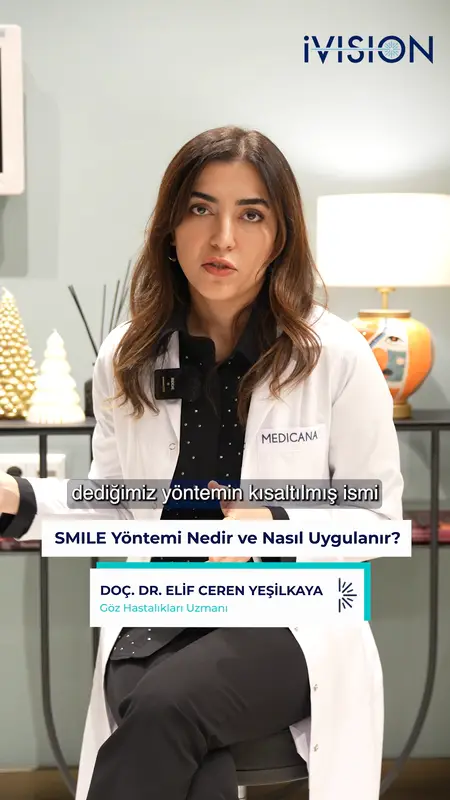
What Is SMILE and How Is It Done?
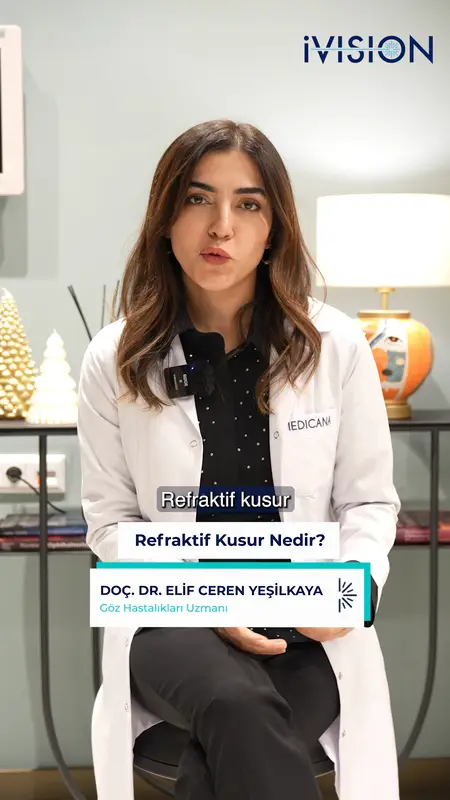
What Is a Refractive Error?
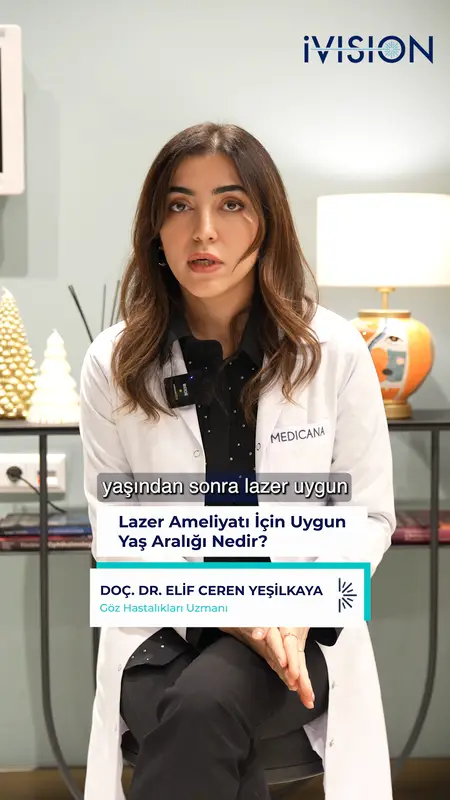
What Is the Right Age for Laser Eye Surgery?
Can Refractive Surgery Be Done If Your Prescription Is Not Stable?
Is There Pain or Discomfort After Refractive Surgery?
Is Local Anesthesia Used in Refractive Surgery?
How can your prescription be changed through a small incision?
In SMILE Pro, the laser defines the boundaries of a thin, lens-shaped piece of tissue within the cornea. This piece is called a lenticule. The shape and thickness of the tissue to be removed are calculated according to the amount of short-sightedness and astigmatism to be corrected. The surgeon separates the lenticule from the surrounding tissue and removes it through a 2–4 mm incision at the edge of the cornea.
Removing the tissue changes the cornea’s curvature and its ability to bend light. The aim is to reduce your need for glasses or contact lenses by allowing light to focus on the retina. No broad flap is created on the cornea. The incision is still in the cornea, so its thickness and structure need to be measured before surgery.
Your prescription affects how much tissue needs to be removed. A small entry incision therefore does not mean that only a small amount of corneal tissue is removed. The volume of the lenticule and the supporting tissue that will remain are calculated for each eye. This calculation is considered alongside your glasses prescription when assessing suitability.
What is the difference between SMILE Pro and SMILE?
SMILE and SMILE Pro use the same approach to removing a lenticule. The Pro version has a shorter laser application time to define the lenticule’s boundaries. Accessing the tissue within the cornea, separating it and removing it through the incision are surgical steps shared by both methods.
The name ‘Pro’ does not replace corneal measurements, prescription stability or tear assessment. Planning includes assessing the lenticule’s position and thickness, and the axis of astigmatism. If these values have been measured incorrectly, the way the device works does not resolve the measurement problem. A corneal map affected by dryness or contact lenses may need to be repeated.
Which prescriptions is it considered for?
The method is most often used for short-sightedness and short-sighted astigmatism. In short-sightedness, distant images are blurred. In short-sighted astigmatism, the eye also bends light with unequal power along different axes. You may see ghosting around letters or images may look stretched.
For long-sightedness, PRK or LASIK is usually discussed. The correction that can be carried out depends on your eye measurements and the treatment limits of the system used. A prescription within these limits does not mean that your cornea is suitable too. The assessment checks whether your astigmatism is regular as well as its amount.
Adults with a stable prescription are considered for assessment. Your previous measurements help establish this stability. Your level of vision with glasses, any lazy eye and retinal findings are also recorded. Age-related difficulty with near vision is linked to the flexibility of your natural lens. You may need reading glasses after a corneal procedure to correct your distance prescription.
How does it differ from LASIK and PRK?
In LASIK, a flap is created at the front of the cornea. The surgeon lifts the flap and an excimer laser reshapes the tissue beneath it. Plus LASIK uses this approach with individual planning based on wavefront measurements and corneal mapping. In SMILE Pro, a femtosecond laser defines the lenticule’s boundaries and the surgeon removes the tissue. This procedure does not use an excimer laser to reshape the surface.
In PRK, the epithelial layer on the outer surface of the cornea is removed, and an excimer laser reshapes the tissue beneath it. The surface is monitored as the epithelium regrows. In SMILE Pro, the surface epithelium is not removed over a broad area. The lenticule within the cornea is reached through the small incision.
These differences also affect which tissue is monitored after surgery and which problems may occur. The assessment checks the flap’s position after LASIK, the surface after PRK, and the area from which the lenticule was removed and the incision after SMILE Pro. Your corneal map, prescription, eye surface and occupation are considered together when choosing a method. The general assessment steps are also explained on the laser eye surgery page.
Who might it be unsuitable for?
If you have keratoconus or corneal irregularity that suggests this condition, removing tissue from the cornea may weaken it further. SMILE Pro is not recommended for these eyes. Other options are considered if your cornea is not thick enough for the planned lenticule or your prescription is still changing.
Uncontrolled dry eye, inflammation of the eyelid margins and active eye infection may delay the decision to operate. Changes in prescription that can occur during pregnancy and breastfeeding mean that the treatment plan is reconsidered. Some immune system conditions, uncontrolled diabetes and medicines can affect how the tissue responds. Tell your doctor about these at your examination.
Previous corneal surgery, scarring in your eye or the development of cataract may also change the choice of method. The absence of a flap does not make SMILE Pro suitable for every thin cornea. If your cornea is unsuitable for laser, options such as a phakic intraocular lens are assessed separately for suitability.
What is checked at your examination?
At your examination at Medicana Zincirlikuyu in Şişli, Istanbul, Assoc. Prof. Dr. Elif Ceren Yeşilkaya assesses your prescription together with maps of your corneal shape and thickness. Each eye is examined separately. Findings from one eye are not enough to plan treatment for the other.
- Refraction: The amount of short-sightedness and astigmatism, the axis of astigmatism and your level of vision with glasses are measured. If needed, the measurement is repeated with drops that relax your eye’s focusing.
- Topography and tomography: The curvature of the corneal surfaces, changes on the back surface and irregularities are examined. These maps help assess suspected keratoconus.
- Corneal thickness (pachymetry): Thickness is measured in different parts of the cornea. The tissue that will remain after lenticule removal is calculated together with the planned treatment area.
- Eye surface and pupil: The distribution of tears, eyelid margins and pupil size under different lighting conditions are examined. Any night vision symptoms are recorded.
- Eye pressure and retina: The optic nerve and retina are assessed. The edge of the retina is checked for thinning and tears, particularly if you have high short-sightedness.
If you wear contact lenses, tell your doctor which type you use and how often you wear them. You may be asked to stop wearing them for a while before the measurements so that they do not affect the corneal map. The condition of your eye surface determines how this break is planned and whether measurements need to be repeated.
What happens on the day of surgery?
The area around your eye is cleaned and a small clip is placed to keep your eyelids open. After the laser plan and the eye to be treated have been checked, your eye is held steady by a device that attaches with suction. You are asked to follow the light that guides your gaze. Tell the team if you feel pressure or notice a change in your vision.
The femtosecond laser creates the lenticule’s surfaces and the entry incision. The surgeon works through the incision to separate the tissue layers and remove the lenticule. The removed tissue is checked to make sure it is intact, and the area within the cornea and the incision are examined. If the suction connection is lost, the surgeon reassesses the steps. The procedure plan may change.
Come without make-up around your eyes. Report any new crusting or redness. Arrange transport after surgery so that you do not need to drive. Other preparation details are explained at your pre-operative consultation.
What should you pay attention to afterwards?
Your vision may be blurred or fluctuate. You may have a gritty feeling, watering and light sensitivity. Follow the care plan you have been given and do not change the schedule for your prescribed drops yourself. Do not rub your eye. Protect it from dust, dirty water and blows. Clarify the instructions for make-up, swimming and sport at your check-ups.
At your check-up, the incision, corneal clarity, the area from which the lenticule was removed and the tear film are examined. Driving and returning to work are discussed after assessing your vision. You still need an examination after a blow to the eye and regular check-ups even though there is no flap.
Risks and symptoms that need attention straight away
Dry eye, halos and glare around lights at night, reduced contrast or a remaining prescription may occur. Difficulty separating the lenticule, incomplete tissue removal, damage to the incision or corneal irregularity may require further treatment. Infection, an inflammatory reaction and weakening and forward bulging of the cornea (ectasia) are risks that threaten vision. Vision loss that cannot be corrected with glasses may develop.
If you have increasing pain, a sudden drop in vision, marked redness, discharge or severe light sensitivity, seek help without waiting for your appointment. New flashes of light or a curtain-like shadow in your field of vision also need urgent assessment.
Bring your previous glasses prescriptions and any corneal test results to your examination. Mention the sports you do, any risk of a blow to the eye at work and the contact lenses you use. This information is recorded when choosing a method.
{ AI · preliminary guidance }
onlineAsk our AI assistant about laser and ICL
AI responses do not replace a medical diagnosis.
Frequently asked questions
-
Is a corneal flap created in SMILE Pro?
No corneal flap is created. The lenticule formed within the cornea is removed through a 2–4 mm incision at its edge. This is what is meant by a flapless method.
-
What is the difference between SMILE and SMILE Pro?
Both remove a lenticule from within the cornea. The Pro version has a shorter laser application time to create the lenticule. Suitability is still assessed on the basis of corneal measurements and eye health.
-
I am long-sighted. Can I have SMILE Pro?
SMILE Pro is most often considered for short-sightedness and short-sighted astigmatism. For long-sightedness, PRK or LASIK is usually discussed. Your examination determines which correction is possible.
-
What is the highest prescription it can treat?
The range of prescriptions that can be treated depends on the limits of the system used and your eye measurements. The decision cannot be based on your prescription alone without calculating corneal thickness, the lenticule to be removed and the tissue that will remain.
-
Can SMILE Pro cause dry eye?
Even without a flap, corneal nerves can be affected. Dryness may develop or existing dryness may get worse. This is why your tears are assessed before surgery and check-ups are carried out afterwards.
-
I play contact sports. Is it suitable for me?
The absence of a flap may be taken into account when choosing a method. There is still a risk of a blow to the eye. Your sport, corneal measurements and eye health are assessed together.
-
Can SMILE be repeated if some of my prescription remains?
If further correction is needed, the stability of your prescription and the remaining corneal tissue are assessed. The procedure is chosen according to your previous surgery. You should not assume that the same method will be repeated.
- Published
- Last updated
Appointment
Would you like more information?
Use this short form to ask about SMILE Pro Laser Surgery. We reply during working hours.
Treatments often evaluated together
-
Laser Eye Surgery (PRK, LASIK, SMILE)
How PRK, No-Touch, LASIK and SMILE Pro differ, which corneal measurements decide whether you are a candidate, and how to look after your eyes afterwards.
-
Phakic Intraocular Lens (ICL)
How an ICL corrects vision in eyes unsuitable for laser because of a thin cornea or high prescription, the measurements it needs and aftercare.
-
Keratoconus Treatment
Keratoconus usually starts in the teenage years. Topography follow-up, corneal cross-linking (CXL), rigid and scleral lenses, rings and transplant.

Book an examination
Your details reach Dr. Yeşilkaya's team, and we will get back to you during working hours.
+90 537 858 78 07