

Intraocular Lens (Multifocal, Trifocal, EDOF) Surgery
What is it? Who is it suitable for? Recovery Process
Intraocular lens surgery is a procedure performed primarily for cataract treatment or to reduce dependence on glasses. In this surgery, the eye’s natural lens is removed and replaced with an artificial intraocular lens (IOL).

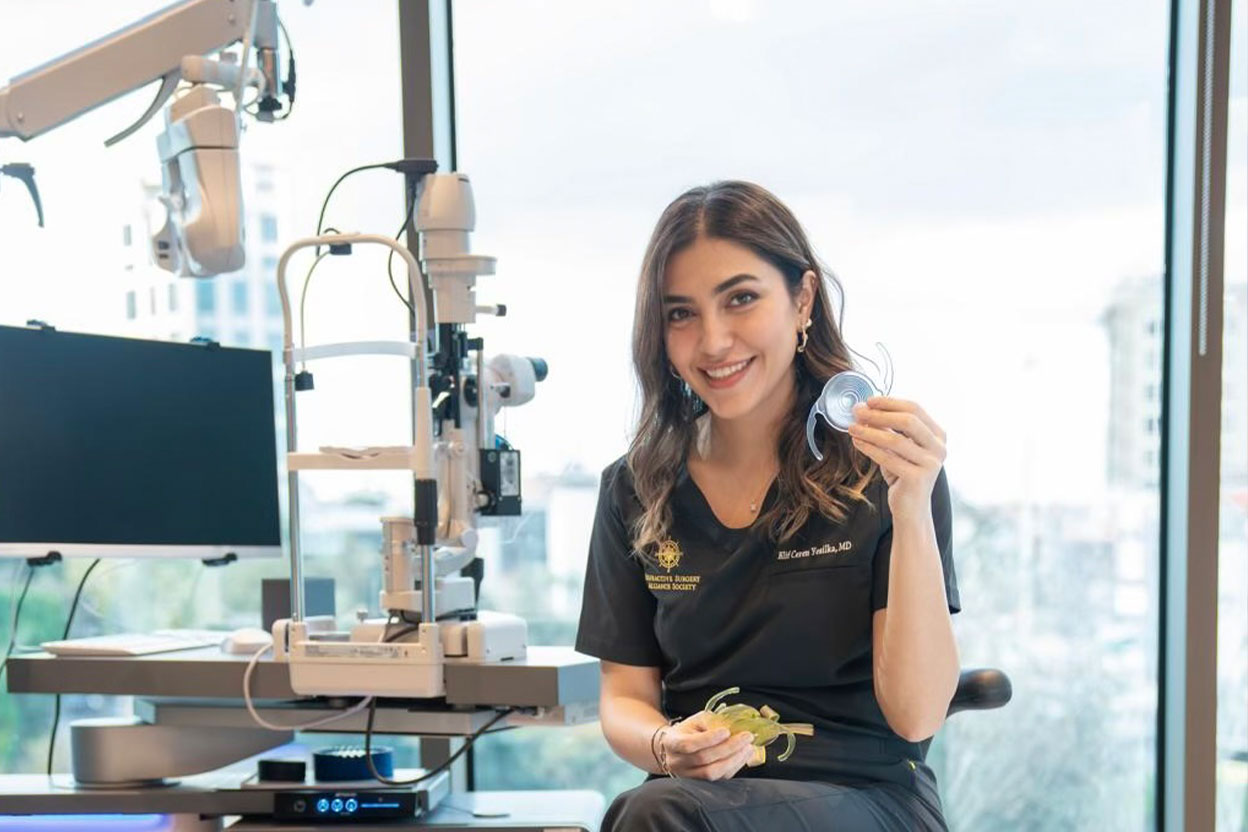
Types of Lenses
1. Multifocal Lens
(Multi-Focus)
• Can focus on both near and far distances.
• Usually has two focal points.
• While providing reading and distance vision, intermediate distances (e.g., computer use) may not be clear.
• Side effects such as light scattering and night glare may occur.
2. Trifocal Lens
(Three-Focus)
• Provides near, intermediate, and far vision.
• Ideal for people who need intermediate vision, such as for computer or tablet use.
• One of the most commonly preferred advanced lens types today.
• Significantly reduces the need for glasses.
• Light reflections and glare may occur but usually diminish over time.
3. EDOF (Extended Depth of Focus) Lens
• A special technology that increases depth of focus.
• Sharpens vision, providing a more natural view, especially at intermediate and distant ranges.
• Near vision may be slightly weaker compared to multifocal and trifocal lenses.
• Produces less light reflection/glare.
• Offers a more natural and comfortable vision experience.
Who is it suitable for?
• Cataract patients
• Those over 45 with presbyopia (near vision problems)
• Those who want a glasses-free life
Recovery Process
Immediately after surgery, you may experience slight stinging, blurred vision, watering, and light reflections in the eye. These symptoms usually subside within a few days, and vision begins to clear significantly within the first week. Full visual adaptation can take 1–3 months; temporary symptoms such as glare from lights at night may occur, especially with trifocal and multifocal lenses.
Antibiotic and cortisone eye drops are usually prescribed for the postoperative period. The eye should not be rubbed, hygiene should be maintained to prevent infection, and doctor’s appointments should not be missed. Most patients can return to their daily lives within 1 week, but several weeks of follow-up may be required for complete healing and clear vision.